
* All product/brand names, logos, and trademarks are property of their respective owners.
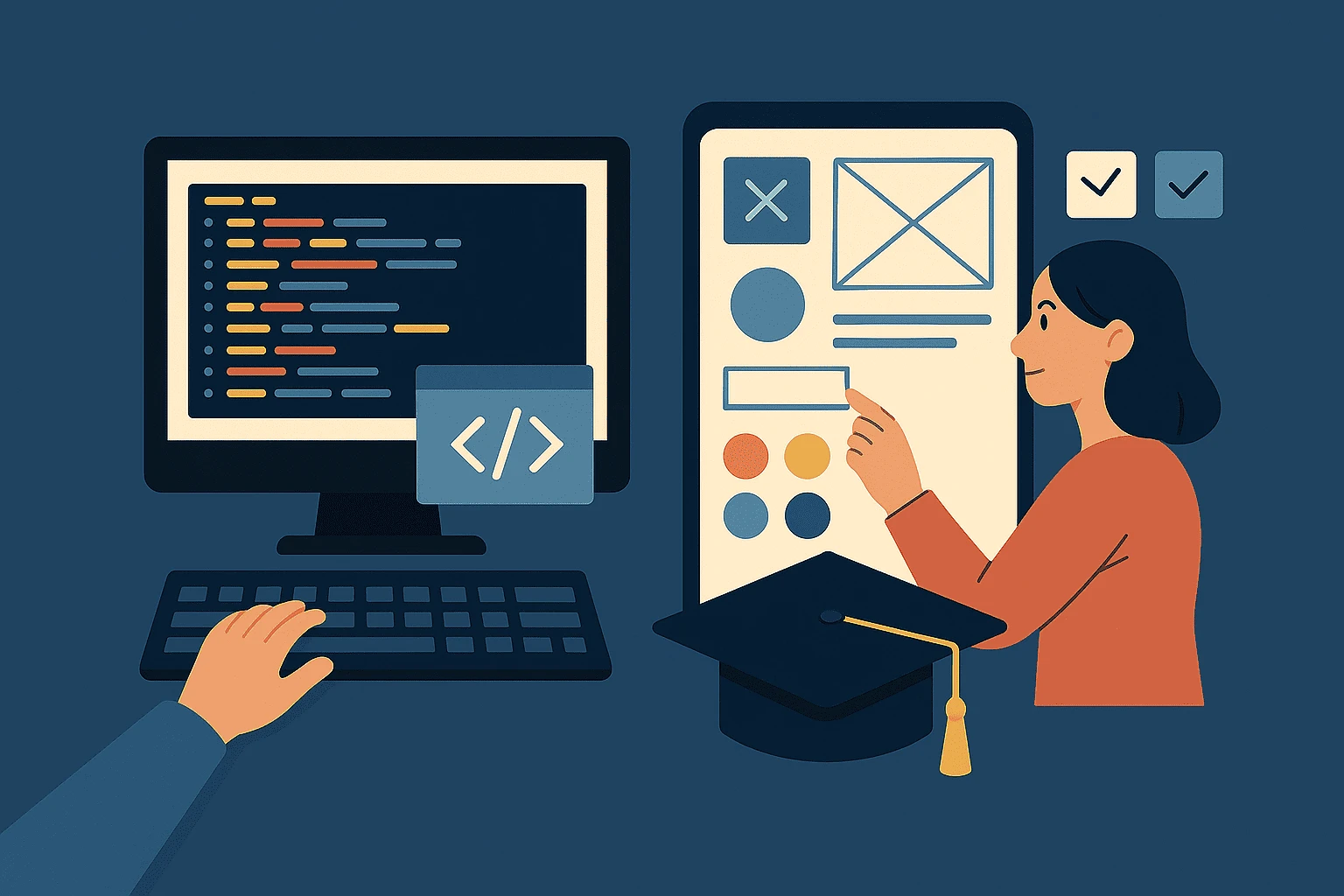
There was a time when tech careers were almost entirely associated with coding, algorithms, and back-end development. But the digital world has evolved — and so have the skills needed to thrive in it. Today, the spotlight is shifting toward the people who design the experience, not just the functionality. Enter the world of UX/UI design — a creative, human-centered field that blends art, psychology, and technology.
From the apps we use daily to the websites we visit, UX (User Experience) and UI (User Interface) designers play a critical role in shaping how users interact with digital products. Their goal? To make things not only look good but feel intuitive, seamless, and accessible. As demand grows for thoughtful design, so does the need for qualified professionals who understand both the theory and the tools behind good user experience.
That’s where education comes in. Over the past few years, UX/UI design degrees have surged in popularity. More universities and online platforms are offering structured programs focused on design thinking, user research, interface aesthetics, and even behavioral psychology. Whether you’re a student fresh out of high school or a mid-career professional looking to pivot, there are more paths into the design world than ever before.
This blog explores how UX/UI has risen beyond the shadows of coding and become a powerhouse career field in its own right. We’ll break down the growth of formal design education, look at the current landscape in Pakistan and abroad, and uncover the exciting career opportunities waiting on the other side of a well-crafted portfolio or a degree.
At first glance, UX/UI design might seem like it’s all about colors, fonts, and layouts — but the reality runs much deeper. Behind every smooth scroll and satisfying click is a carefully studied understanding of human behavior.
Great UX design begins with empathy. Designers put themselves in the user’s shoes to understand pain points, motivations, and habits. This human-centered approach allows them to build products that aren’t just beautiful — they’re functional, intuitive, and even emotionally engaging.
For example, consider how users react to a cluttered vs. clean interface. A well-designed app doesn’t overwhelm; it guides the user step-by-step, offering just the right information at the right time. This is based on principles from cognitive psychology — like memory load, visual hierarchy, and attention span. Even the spacing between elements (called white space) influences how a user feels while interacting with a product.
Designers also rely on tools like user personas, journey maps, and usability testing to ensure they’re solving real problems for real people. The goal isn’t to just “make it pretty” — it’s to make it meaningful.
Beyond making users happy, good design has a direct impact on business success. A seamless user experience can boost conversion rates, increase customer retention, and reduce support costs. In contrast, poor design leads to frustration, high bounce rates, and lost revenue.
For instance, something as small as a confusing checkout process can cost an e-commerce site thousands in abandoned carts. Meanwhile, a polished, intuitive design builds trust and encourages users to return — or better yet, recommend the service to others.
In competitive markets, UX/UI design becomes a key differentiator. When two products offer similar features, the one with better usability often wins. Companies like Apple, Airbnb, and Spotify invest heavily in UX/UI because they know it’s not just about function — it’s about how users feel.
Even in Pakistan, more businesses are recognizing this. Startups and tech companies are hiring dedicated UX professionals to fine-tune their apps and websites. They’re learning that good design isn’t a luxury — it’s a smart business move.
As the demand for UX/UI professionals grows, educational institutions across the globe are stepping up. What used to be a niche elective within graphic design or computer science programs has now evolved into full-fledged degree tracks dedicated to user experience and interface design.
Leading universities are rethinking how they teach design. Instead of focusing solely on visuals or tools, today’s programs integrate design thinking, user psychology, data analysis, and human-computer interaction (HCI). Some even include courses in accessibility, cultural context, and ethics in design — reflecting how broad and impactful the field has become.
For example, institutions like the Massachusetts Institute of Technology (MIT), Carnegie Mellon, and Parsons School of Design offer specialized tracks that merge creativity with technical skill. These degrees don’t just teach how to use Figma or Adobe XD — they teach students how to think like designers who solve problems.
Students graduate with not just academic knowledge, but industry-ready portfolios — a major advantage when applying for competitive roles in tech, product design, and user research.
At the same time, online learning platforms are making UX/UI education more accessible than ever. Platforms like Coursera, Google UX Certificate, Udemy, and Interaction Design Foundation offer in-depth, self-paced courses that are often more affordable and flexible than traditional universities.
These programs cater to a diverse audience: from complete beginners to seasoned professionals wanting to upskill. Many include real-world projects, peer feedback, and certification — making them credible in the eyes of employers.
But which is better: a formal degree or a short online course?
The answer depends on the learner. A 4-year degree might provide a strong foundation, networking opportunities, and academic depth. Meanwhile, short courses offer quick, practical skills and are ideal for those looking to transition careers or fill skill gaps.
Many professionals combine both — earning certifications while building a portfolio and working freelance. The key is to stay hands-on, regardless of the path.
The UX/UI in Pakistan is catching up quickly, with several universities and private institutions now offering courses and diplomas tailored to digital design. While the industry is still developing, the demand for skilled designers is creating exciting opportunities for learners.
Among the top institutions leading this shift are:
National University of Sciences and Technology (NUST) – Offers design-focused electives within its computer science and engineering faculties, along with research in human-computer interaction.
COMSATS University (Islamabad campus) – Includes UI/UX modules within its media sciences and software engineering programs.
Information Technology University (ITU), Lahore – Known for integrating tech and design thinking, with a curriculum influenced by global UX standards.
Institute of Art and Culture (IAC), Lahore – Offers digital design degrees that include user interface and interaction design components.
In addition to universities, several private academies are filling the gap through bootcamps and certification programs:
UIT Institute of Design, EVS Institute, UXStart, and online communities like UX Pakistan provide short courses in UX fundamentals, design tools, and research methods.
These programs aim to produce designers who are not just visually skilled, but also capable of understanding user needs, product strategy, and usability testing.
Despite these advancements, UX/UI education in Pakistan still faces a few hurdles.
First, there's a lack of awareness. Many students and parents still see tech careers only through the lens of programming or engineering. UX/UI is often misunderstood as “graphic design” or “just making things look nice,” which undervalues its strategic importance.
Second, outdated or generalized curricula in some institutions fail to meet real industry needs. While tools like Adobe XD or Figma are taught, deeper concepts like user testing, accessibility, or UX writing are often skipped or barely touched.
Third, there’s a shortage of experienced mentors and instructors who have worked hands-on in the field. This gap makes it harder for students to grasp real-world expectations, workflows, and design thinking methodologies.
However, this challenge is also an opportunity. With a rising number of UX professionals, freelancers, and agencies in Pakistan, more designers are stepping up to mentor, launch community events, or create local resources. Platforms like UX Pakistan, DesignersPK, and various local Discord groups are helping build a support system.
In short, while the ecosystem is still maturing, Pakistan holds huge potential for UX/UI growth — and early adopters will benefit the most.
The world of UX/UI offers far more than just a generic “designer” title. As the field matures, a variety of specialized roles have emerged, each focusing on a different stage of the design process.
Here are some of the most in-demand roles today:
UX Researcher – Focuses on user behavior, usability testing, and gathering insights through interviews and data.
UI Designer – Specializes in interface layout, visual hierarchy, and the aesthetics of digital products.
UX Writer – Crafts microcopy, error messages, and onboarding instructions to ensure clear and friendly communication.
Interaction Designer – Designs how users move through an app, including animations, transitions, and touchpoints.
Accessibility Specialist – Ensures digital experiences are usable for people with disabilities.
These roles are often found within teams at tech companies, design agencies, and startups. Many professionals also blend roles — becoming hybrids like product designers or design strategists — based on their skills and interests.
No matter what path you choose, a strong UX/UI portfolio is essential. It’s more than just a collection of pretty screens — it’s your opportunity to tell stories, show your thinking, and explain how you solve real problems.
Here’s what a winning portfolio includes:
Case studies: A breakdown of the project goal, research process, design iterations, and results.
Wireframes and mockups: Early drafts and final designs to show your progression.
User flows and journey maps: Demonstrate how users interact with your product and what pain points you addressed.
Reflection: What you learned, what went well, and what you’d do differently.
Tools like Behance, Dribbble, Notion, and your own personal website can help you showcase your work. Employers often care more about how you think than how you design — so explaining your process is just as important as the visuals.
One of the most attractive aspects of UX/UI is its flexibility. With strong demand worldwide, many designers choose to freelance or work remotely — especially in markets like Pakistan where local salaries may be lower than international standards.
Here’s what the earning potential looks like:
Entry-level UX/UI roles in Pakistan (in cities like Lahore, Karachi, Sialkot): PKR 35,000 to 70,000/month
Mid-level designers: PKR 80,000 to 150,000/month
Senior/remote roles or international clients: PKR 200,000+ or USD-based contracts
Platforms like Upwork, Fiverr, Toptal, and LinkedIn allow Pakistani designers to connect with clients around the globe. Many successful freelancers earn USD, work flexible hours, and build global portfolios — all from their laptops.
Remote work has also become the norm for many tech companies, giving talented designers in Pakistan a seat at the global table — provided they can communicate well, meet deadlines, and deliver high-quality work.
UX/UI design is no longer a side note in the tech world — it’s a central force driving how we interact with digital experiences. It’s the difference between a product people love and one they abandon. And as the industry grows, so do the opportunities for those willing to learn, create, and think beyond just the code.
Whether you're pursuing a formal UX/UI degree, learning through online courses, or picking up skills while working on passion projects, the path into design is more flexible than ever. What matters most is your ability to solve real problems for real people, communicate your thinking, and stay curious about how users behave.
In Pakistan and across the world, more companies are recognizing that design isn’t just about aesthetics — it’s about strategy, empathy, and business impact. This shift opens doors for designers from all backgrounds, especially those who combine education with real-world application.
So if you're wondering whether a UX/UI career is worth exploring — the answer is a loud, confident yes. With the right mix of learning, practice, and persistence, you can build a meaningful, future-proof career in this exciting space.
Already on your UX/UI journey? Or thinking of starting one? Share your thoughts, experiences, or questions in the comments below — we’d love to hear from you!

Waqar Azeem is a digital marketing and web development specialist who bridges the gap between marketing and engineering. On the marketing side, he works extensively with Google Ads, Google Merchant Center, and Google Analytics — managing campaigns, product feeds, and conversion tracking to help businesses grow their online visibility and sales. On the development side, he builds and maintains web applications using Yii2 and Next.js, giving him a rare ability to handle both the technical infrastructure and the marketing performance of a website. This combined skill set lets him approach projects holistically, ensuring that what gets built is also built to perform.
Some students spend hours studying but still struggle to remember what they learned. Others seem to
11 April 2026
Changing your career can feel like standing at the edge of a cliff — exciting, but terrifying.
23 August 2025
In today’s fast-changing world, the way we learn has evolved just as rapidly as the technology
23 August 2025
Be the first to share your thoughts
No comments yet. Be the first to comment!
Share your thoughts and join the discussion below.