* All product/brand names, logos, and trademarks are property of their respective owners.
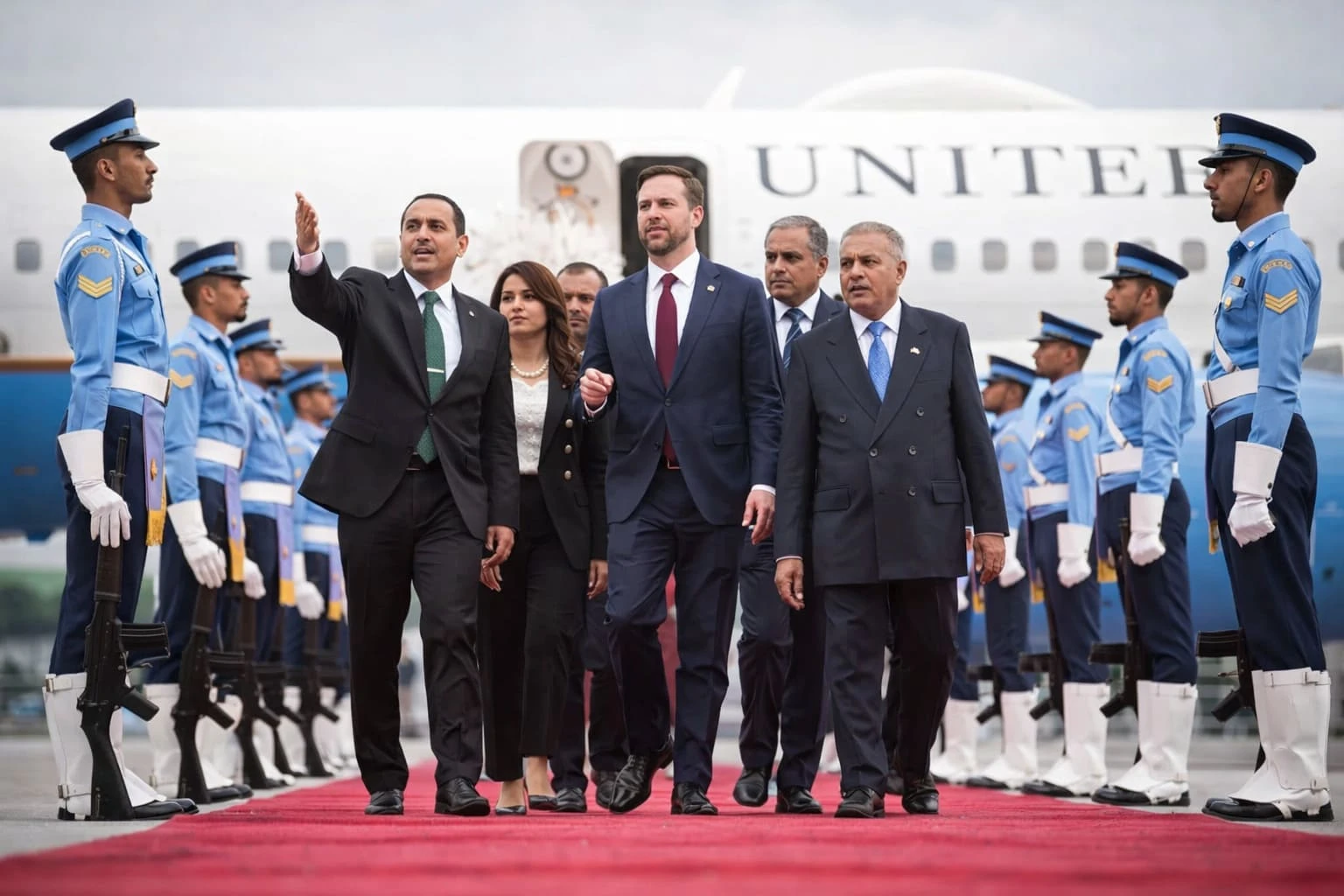
JD Vance has arrived in Pakistan at a time when global tensions are running high, and all eyes are now on Islamabad. The visit comes amid renewed efforts to ease friction between the United States and Iran, with ceasefire talks taking place behind closed doors in the Pakistani capital.
This unexpected diplomatic development has quickly turned Pakistan into a key stage for international negotiations. With both Washington and Tehran looking for a way forward, the JD Vance Pakistan visit signals a potentially important moment — not just for the two countries involved, but for regional and global stability.
As discussions unfold, the big question remains: can these talks lead to real progress, or are they another stalled attempt at de-escalation?
JD Vance is in Pakistan to lead high-level U.S. talks with Iran in Islamabad as part of an effort to preserve a fragile ceasefire after weeks of conflict. The meetings became especially important because they marked a rare direct round of face-to-face negotiations between senior American and Iranian officials.
The main goal of the U.S. side was to test whether diplomacy could produce a broader agreement after the temporary truce. According to multiple reports, Washington wanted firm commitments from Iran on its nuclear program, missile-related concerns, support for regional proxy groups, and the reopening of the Strait of Hormuz to more stable international shipping.

Another reason this visit matters is timing. The talks in Islamabad ran for about 21 hours but ended without a final agreement, leaving the ceasefire under pressure rather than fully secured. Reports say both sides blamed each other for the deadlock, with JD Vance publicly saying Iran would not accept the U.S. terms, especially around nuclear restrictions.
So, in simple terms, JD Vance is in Pakistan because Islamabad became the venue for one of the most sensitive diplomatic efforts in the current U.S.-Iran crisis. His trip is not a routine visit. It is tied directly to an attempt to stop the conflict from widening and to see whether diplomacy still has a path forward.
The Islamabad talks were built around one core goal: turning a fragile ceasefire into something more stable and long-lasting. But while both sides came to the table, their expectations were very different.
The U.S. entered the talks looking for broader commitments beyond just stopping the immediate conflict. Its priorities include:
Iran’s position focuses more on sovereignty and compensation. Key demands include:
Tehran views many U.S. demands as one-sided, which is why negotiations have been difficult.

At the heart of the talks are a few major sticking points:
These are not small issues—they’ve been points of conflict for years, and Islamabad became the latest attempt to bridge that gap.
While not a direct party, Pakistan played a crucial facilitation role:
This setup allowed both countries to engage without the political pressure of meeting on each other’s soil.
Pakistan’s involvement in these talks is not accidental. Islamabad has increasingly positioned itself as a neutral diplomatic space, especially in situations where direct engagement between rival countries is difficult.
Several factors made Pakistan a suitable venue:
While Pakistan is officially acting as a facilitator, the move also carries clear strategic advantages:

Pakistan’s leadership has been trying to shift focus toward economic stability and global engagement, and hosting talks like these supports that direction.
It signals that the country is:
The talks in Islamabad were intense, closely watched, and largely held behind closed doors. While official details remain limited, several key developments give a clearer picture of how things unfolded.
JD Vance led the U.S. delegation in direct and indirect discussions with Iranian representatives. These meetings were:
Pakistani officials remained in the background, helping maintain communication and ensuring the talks progressed smoothly.
The atmosphere was not easy or cooperative throughout. Reports suggest:
This made progress slow and uncertain.
Despite long discussions, the talks ended without a formal deal. Key reasons include:
However, the absence of an agreement does not necessarily mean failure—it often reflects how complex these negotiations are.
One positive outcome is that dialogue did not collapse completely:
This keeps a diplomatic path alive, even if progress is slow.
Overall, what happened in Islamabad was less about a breakthrough and more about testing the possibility of one. The talks showed that communication channels are open—but also highlighted just how deep the divide still is.
The Islamabad talks go far beyond a routine diplomatic meeting. What’s happening between the U.S. and Iran has ripple effects that can influence regional stability, global markets, and international security.
The U.S.-Iran relationship sits at the center of many conflicts in the Middle East. Any progress—or failure—can:
One of the most sensitive aspects of this situation is energy security:
Even the uncertainty around these talks can cause fluctuations in energy markets.
These talks also reflect how the United States is approaching global conflicts:
The outcome will shape how the U.S. handles similar situations moving forward.
Beyond the U.S. and Iran, other countries are watching closely:
This makes the Islamabad discussions part of a much larger geopolitical puzzle.

With no final agreement reached in Islamabad, the situation now moves into a wait-and-watch phase. While the talks didn’t deliver a breakthrough, they also didn’t shut the door on diplomacy.
A few likely scenarios are moving forward:
If momentum is lost, tensions could rise again:
Experts and observers are closely tracking a few key signals:
These indicators will help determine whether diplomacy is progressing or fading.

The JD Vance Pakistan visit marks an important moment in ongoing efforts to ease tensions between the United States and Iran. While the Islamabad talks did not produce a breakthrough, they underline how critical diplomacy remains in preventing further escalation.
For Pakistan, this development reinforces its role as a credible platform for international dialogue. For the world, it’s a reminder that even stalled talks can lay the groundwork for future progress.
As the situation evolves, the real impact of these discussions will depend on whether both sides are willing to return to the table with greater flexibility.

Feroza Arshad is a writer and content creator covering a range of subjects including news and current affairs, automobiles, sports, technology and coding, digital marketing, and Google and search trends. Her work appears across several blogs and publications. She focuses on clear, well-researched, and genuinely useful writing — breaking down developments, reviewing products, and explaining technical topics in plain language anyone can follow.
South Korea’s expanding presence in Vietnam is gaining momentum at a time when its domestic ec
23 April 2026
Be the first to share your thoughts
No comments yet. Be the first to comment!
Share your thoughts and join the discussion below.