
* All product/brand names, logos, and trademarks are property of their respective owners.
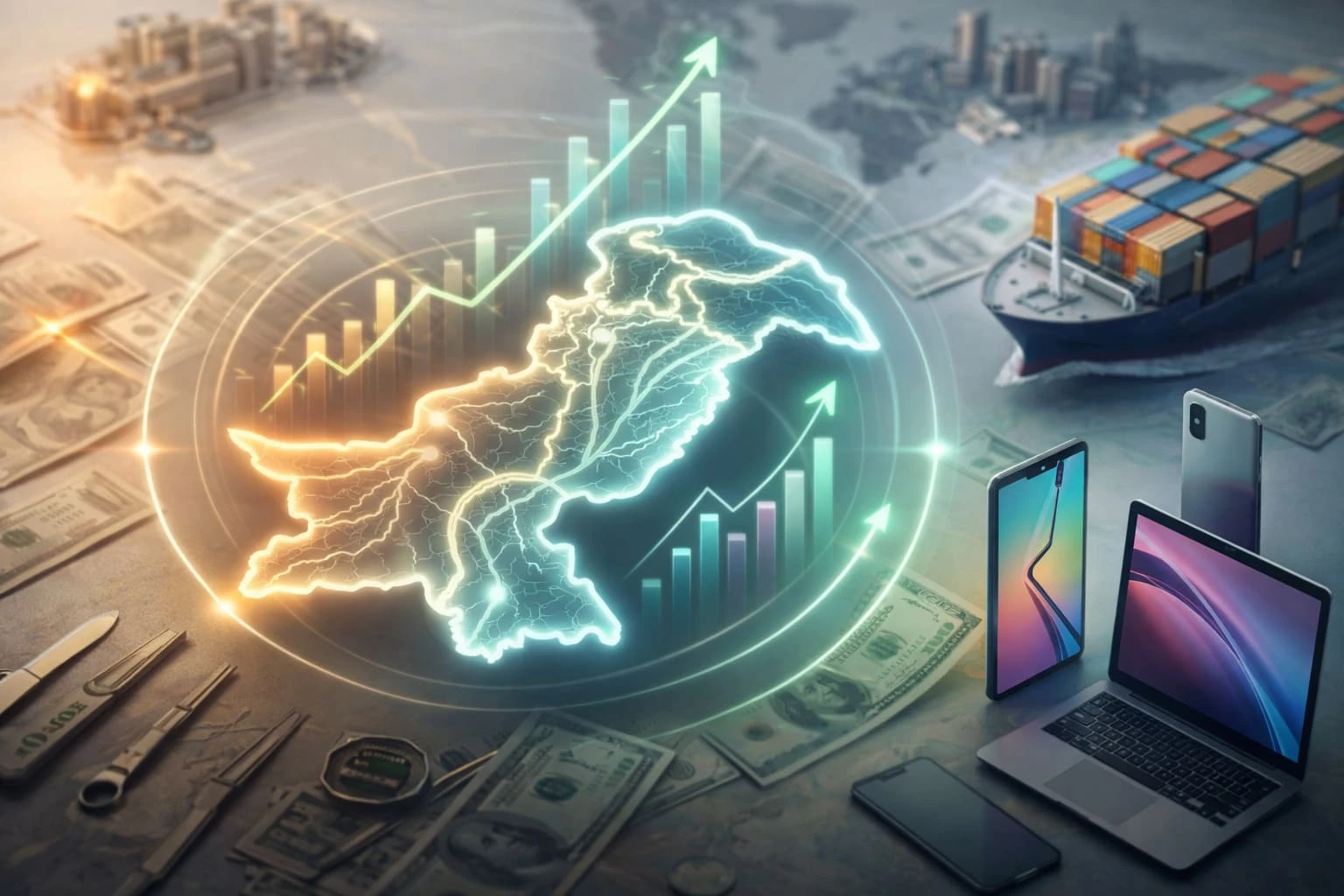
The Pakistani rupee has been under constant pressure, making headlines whenever it rises or falls against the US dollar. But here’s the part most people miss: a weaker rupee doesn’t always mean the economy is becoming more competitive.
That’s where the Real Effective Exchange Rate in Pakistan comes in.
Think of REER as a more honest measure of the rupee’s strength. It doesn’t just look at exchange rates—it adjusts for inflation and compares Pakistan with its major trading partners. In other words, it tells you whether the currency is truly competitive or appears weak on the surface.
This matters more than it seems. REER quietly influences:
So if you want to understand what’s really happening beneath the rupee’s ups and downs, REER is a signal you shouldn’t ignore.
The Real Effective Exchange Rate (REER) sounds technical, but the idea behind it is actually simple.
At its core, REER tells you how strong or weak a country’s currency really is, after adjusting for inflation and comparing it with multiple trading partners—not just the US dollar.
Imagine two countries:
If Pakistan’s inflation is rising faster than these countries', then even if the rupee weakens against the dollar, Pakistani goods may still become relatively expensive.
That’s exactly what REER captures.
It answers this key question:
Is Pakistan becoming more competitive in global trade—or less?

REER is based on three main elements:
Looking only at the dollar rate can be misleading.
That’s why economists, central banks, and institutions like the SBP rely on REER—it reflects the true economic position, not just surface-level currency movement.
People often judge a currency by one number: how many rupees it takes to buy one US dollar. That is the nominal exchange rate. It is useful, but it only shows the market price of one currency against another.
The Real Effective Exchange Rate (REER) goes much deeper. It adjusts for inflation and compares Pakistan’s currency with a group of major trading partners. That makes it far more useful when the goal is to understand trade competitiveness.
| Factor | Nominal Exchange Rate | Real Effective Exchange Rate |
|---|---|---|
| What it shows | The price of one currency against another, such as USD/PKR | The inflation-adjusted value of a currency against a basket of trading partners |
| Inflation impact | Not included | Included |
| Trade relevance | Limited | High |
| Scope | Usually, one currency pair | Multiple trading partners |
| Best use case | Tracking market movement or exchange value | Measuring competitiveness and external balance |
A falling rupee in nominal terms may look like good news for exporters. On paper, Pakistani goods become cheaper for foreign buyers. But that advantage can disappear if inflation inside Pakistan rises too fast.
For example:
That is why REER is often a better signal than the nominal exchange rate alone. One tells you what the currency is doing on the surface. The other tells you what that movement actually means for the economy.
The Real Effective Exchange Rate in Pakistan is not just an economic indicator for analysts—it directly affects the economy's performance in real terms. From exports to inflation, REER quietly shapes outcomes that impact businesses and everyday life.
Here’s how:
For a country like Pakistan, exports—especially textiles—are a major source of foreign income.
Even if the rupee weakens, rising local costs (energy, wages, raw materials) can cancel out that advantage. REER captures this reality.
Pakistan relies heavily on imports like:
When REER rises:
REER is closely tied to inflation dynamics.
Result:
The State Bank of Pakistan (SBP) closely monitors REER when making decisions.
It helps guide:
A persistently high REER may signal the need for policy tightening or currency adjustment.
REER plays a major role in whether Pakistan runs a:
If REER indicates overvaluation:
In simple terms, REER connects multiple parts of the economy:
That’s why economists don’t just watch the rupee—they watch what REER is quietly revealing underneath.

Understanding REER becomes most valuable when you look at what it’s signaling in the present—not just what it means in theory.
Despite periods of rupee depreciation, Pakistan has struggled to gain a strong export advantage.
Signal: The economy is not gaining as much export strength as expected
Even when the rupee appears weak in nominal terms:
Signal: Exchange rate adjustments alone are not solving structural issues
Key export sectors like textiles are affected by:
If REER remains relatively high:
Signal: Competitiveness issues go beyond just the exchange rate
Pakistan’s reliance on imports means:
Signal: External vulnerability remains high
The State Bank of Pakistan faces a difficult balance:
REER acts as a quiet warning system here.
Signal:
Under IMF programs, Pakistan is often pushed toward:
REER helps assess whether:
Signal: Policy direction will likely stay focused on correction and stabilization
To understand where Pakistan is heading, keep an eye on:
These factors will directly influence REER—and in turn, the broader economic outlook.
REER doesn’t make headlines like the dollar rate, but it often tells the more important story. Right now, that story suggests Pakistan is still navigating competitiveness challenges beneath the surface.
REER doesn’t move randomly—it responds to a mix of economic forces, both domestic and global. Understanding these drivers makes it easier to interpret what changes in REER actually mean.
Here are the main factors shaping the Real Effective Exchange Rate in Pakistan:
This is one of the biggest drivers.
This is why controlling inflation is critical for maintaining competitiveness.
How the rupee is managed plays a direct role.
The gap between imports and exports matters.
Pakistan imports key commodities like oil.
Monetary policy also plays a role.
This is often overlooked but crucial.

The Real Effective Exchange Rate in Pakistan is more than just an economic indicator—it’s a deeper signal of where the economy truly stands.
While the rupee’s movement against the dollar grabs attention, REER tells the more important story. It shows whether Pakistan is actually becoming more competitive or simply reacting to short-term pressures. And as we’ve seen, a weaker rupee doesn’t always translate into stronger exports or a healthier economy.
What makes REER so valuable is its ability to connect the dots:
For Pakistan, the message is clear. Sustainable economic stability won’t come from exchange rate movements alone. It requires controlling inflation, improving productivity, and creating a more balanced trade environment.
If you want to understand where the economy is heading—not just where the currency is moving—REER is one signal you can’t afford to ignore.

Feroza Arshad is a writer and content creator covering a range of subjects including news and current affairs, automobiles, sports, technology and coding, digital marketing, and Google and search trends. Her work appears across several blogs and publications. She focuses on clear, well-researched, and genuinely useful writing — breaking down developments, reviewing products, and explaining technical topics in plain language anyone can follow.
Be the first to share your thoughts
No comments yet. Be the first to comment!
Share your thoughts and join the discussion below.